




Overview of Penile Cancer
Penile cancer is an uncommon but serious malignancy that affects the skin and underlying tissues of the penis. Though relatively rare compared to other cancers, its impact on physical health, urinary function, sexual well-being, and psychological confidence can be profound. Early recognition and timely expert treatment are critical to achieving cure while preserving function and quality of life.
Many patients hesitate to seek medical attention due to embarrassment or lack of awareness. Unfortunately, delay in diagnosis often allows the disease to progress to regional lymph nodes. The good news is that when penile cancer is detected early, it is highly curable, and in many cases, organ-preserving surgery can be performed.
Dr. Lovedeep Singh Chauhan, Consultant Surgical Oncologist at Max Super Speciality Hospital, Mohali, provides evidence-based, compassionate, and advanced surgical management for penile cancer. With specialized training in oncologic surgery and multidisciplinary cancer care, he focuses on achieving optimal cancer control while preserving function whenever possible.
Understanding Penile Cancer
What is Penile Cancer?
Penile cancer develops in the tissues of the penis, most commonly originating from the skin cells. The majority of cases are classified as Squamous Cell Carcinoma, accounting for nearly 95% of all penile malignancies. This type arises from the thin, flat squamous cells that form the outer layer of penile skin.
Other rare forms include melanoma, basal cell carcinoma, sarcoma, and adenocarcinoma. These subtypes behave differently and may require tailored treatment strategies.
Common Sites of Penile Cancer
- The glans (head of the penis)
- The foreskin (prepuce)
- The coronal sulcus
- Less commonly, the shaft
The disease often begins as a small lesion or non-healing ulcer and may slowly enlarge if left untreated.
Causes and Risk Factors of Penile Cancer
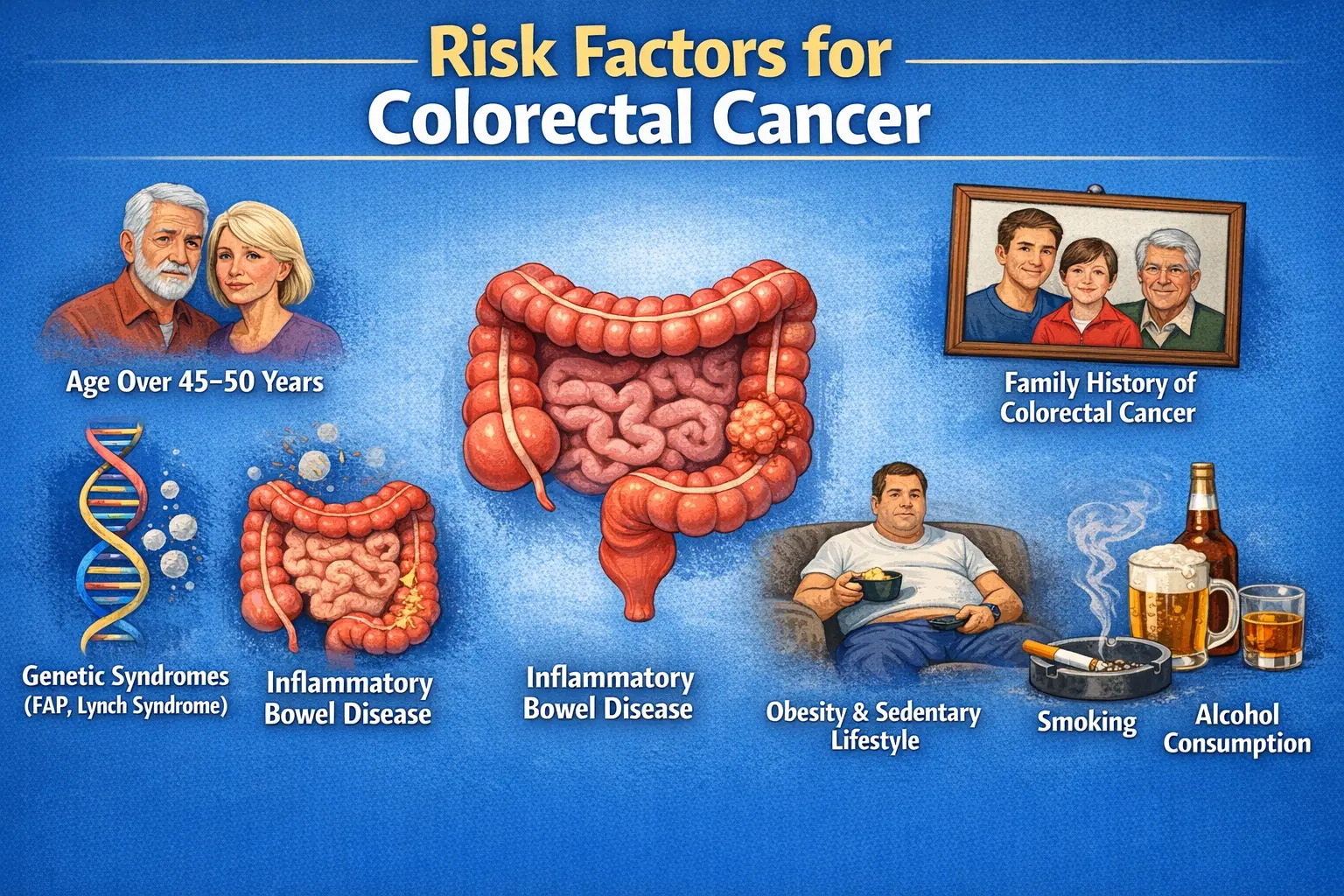
Penile cancer usually develops over several years due to chronic irritation, infection, or oncogenic viral exposure. Key risk factors include:
Persistent infection with high-risk HPV strains, particularly HPV-16 and HPV-18, is strongly associated with penile cancer. HPV-related cancers often occur in younger men.
Accumulation of smegma under the foreskin can cause chronic inflammation, increasing cancer risk.
Tight foreskin that cannot be retracted leads to poor hygiene and prolonged irritation.
Tobacco exposure weakens the immune response and promotes carcinogenic changes.
Conditions such as lichen sclerosus may predispose to malignant transformation.
Circumcision during infancy reduces long-term risk, although adult circumcision does not provide the same protective effect.
Symptoms of Penile Cancer
Penile cancer may initially appear harmless. Any persistent abnormality lasting more than two to three weeks should be evaluated promptly by a specialist.
- A painless lump or growth
- A non-healing ulcer
- Red or velvety patch on the skin
- Thickened or hardened skin of the penis
- Foul-smelling discharge
- Bleeding from the lesion
- Swelling in the groin, suggesting lymph node involvement
In early stages, pain is usually absent, which can delay consultation. Awareness of these signs is essential for timely diagnosis and treatment.
Diagnosis and Staging of Penile Cancer
Clinical Examination
A thorough physical examination evaluates tumor size, location, and possible lymph node enlargement in the groin.
Biopsy
Biopsy confirms the diagnosis and provides histopathological evaluation to determine tumor type, grade, and depth of invasion. Usually performed under local anesthesia.
Imaging Studies
- MRI of the penis to assess local tumor extent
- CT scan of abdomen and pelvis to evaluate lymph nodes
- PET-CT in selected advanced cases
Staging
Penile cancer is staged from Stage 0 to Stage IV based on depth of invasion, lymph node involvement, and presence of distant metastasis.
Early Stage Prognosis
Stage I disease has excellent cure rates exceeding 80–90% when treated promptly and appropriately.
Treatment of Penile Cancer
Organ-Preserving Surgery
Conservative surgery removes the tumor while maintaining penile structure and function.
- Wide local excision
- Glansectomy (removal of glans only)
- Reconstructive techniques
Preserving urinary and sexual function is a priority whenever oncologically safe.
Partial Penectomy
Removal of part of the penis may be required for more extensive tumors. Adequate margins prevent recurrence.
Patients receive counseling regarding functional outcomes before surgery.
Total Penectomy
Complete removal of the penis is necessary in advanced local disease. Though emotionally challenging, it is life-saving.
Inguinal Lymph Node Management
- Sentinel lymph node biopsy
- Modified inguinal lymph node dissection
- Radical inguinal dissection
Proper lymph node management significantly improves survival.
Chemotherapy & Radiotherapy
Used in advanced, recurrent, or metastatic cases. Multidisciplinary tumor board discussions guide treatment sequencing.
Importance of Early Treatment & Quality of Life
Importance of Early Treatment
- Organ preservation
- Lower complication rates
- Avoiding lymph node spread
- Better long-term survival
Delay in treatment increases risk of groin metastasis, which significantly affects prognosis.
Psychological and Quality of Life Considerations
- Body image
- Sexual confidence
- Marital relationships
- Mental well-being
Compassionate counseling and clear communication are essential. Treatment decisions are made after thorough discussion with the patient and family.
Penile Cancer Surgery by Dr. Lovedeep Singh Chauhan
Dr. Lovedeep Singh Chauhan is a Consultant Surgical Oncologist at Max Super Speciality Hospital, Mohali, with advanced training from Tata Memorial Hospital, Mumbai — one of India’s premier cancer institutes.
Expertise & Training
- Organ-preserving penile cancer surgery
- Radical oncologic resection
- Advanced lymph node dissection techniques
- Multidisciplinary cancer planning
- Minimally invasive oncologic procedures
Approach & Patient Care
- Complete oncological clearance
- Functional preservation wherever feasible
- Reduced complications
- Evidence-based global treatment protocols
Why Choose Dr. Lovedeep Singh Chauhan?
Expertise & Patient Benefits
- Fellowship-level oncologic training
- Experience in complex cancer surgery
- Structured tumor board evaluation
- Ethical, transparent decision-making
- Detailed pre- and post-operative counseling
- Long-term surveillance planning
Every case is approached individually, ensuring personalized care.
Treatment Facility
- Advanced modular operation theatres
- Dedicated oncology anesthesia support
- Intensive care facilities
- Multidisciplinary tumor board system
- Comprehensive oncology services
This infrastructure ensures safe surgical care and optimal post-operative recovery.
Recovery & Follow-Up
- Resume daily activities within weeks
- Regular follow-up every 3–6 months initially
- Surveillance imaging when indicated
- Long-term follow-up to detect recurrence early
Frequently Asked Questions
Have a Question? Get In Touch


