
!-- HERO SECTION -->

Adenocarcinoma Treatment

Advanced, Evidence-Based Surgical Oncology Care by Dr. Lovedeep Singh Chauhan

Dr. Lovedeep Singh Chauhan

Dr. Lovedeep Singh Chauhan – Consultant Surgical Oncologist

Adenocarcinoma is one of the most commonly diagnosed types of cancer worldwide. It arises from gland-forming epithelial cells that line internal organs and are responsible for producing fluids such as mucus, digestive enzymes, or secretions. Because glandular cells are present in multiple organs, adenocarcinoma can develop in the colon, stomach, pancreas, lungs, esophagus, prostate, breast, and other parts of the body.

Effective treatment of adenocarcinoma requires accurate diagnosis, proper staging, molecular profiling, and carefully planned multimodality therapy. Dr. Lovedeep Singh Chauhan, Consultant Surgical Oncologist at Max Super Speciality Hospital, Mohali, provides comprehensive, evidence-based surgical and multidisciplinary care for patients diagnosed with adenocarcinoma.

Understanding Adenocarcinoma

Adenocarcinoma is a malignant tumor originating from glandular epithelial tissue. These glandular cells line many internal organs and are responsible for secretion. When genetic mutations disrupt normal cell regulation, these cells may grow uncontrollably and form a tumor.

Unlike some rare cancers that are organ-specific, adenocarcinoma is a histological classification. This means it refers to the microscopic pattern of the tumor rather than its location. Therefore, adenocarcinoma may occur in different organs but share similar cellular characteristics.

Dr. Lovedeep Singh Chauhan

Common Sites of Adenocarcinoma

Major organs where adenocarcinoma commonly develops

Colorectal Adenocarcinoma

This is the most common type of colon cancer. It usually develops from precancerous polyps over several years.

Common symptoms include:
  • Blood in stool
  • Change in bowel habits
  • Unexplained anemia
  • Abdominal discomfort
  • Weight loss

Early-stage colorectal adenocarcinoma is highly treatable with surgery.

Lung Adenocarcinoma

Lung adenocarcinoma is the most common subtype of non-small cell lung cancer. It is frequently seen in non-smokers as well.

Symptoms may include:
  • Persistent cough
  • Breathlessness
  • Chest pain
  • Coughing up blood
  • Recurrent chest infections

Gastric (Stomach) Adenocarcinoma

Often associated with chronic gastritis, Helicobacter pylori infection, and dietary factors.

Symptoms include:
  • Persistent indigestion
  • Early fullness while eating
  • Vomiting
  • Weight loss
  • Anemia

Pancreatic Adenocarcinoma

One of the more aggressive forms of cancer, often diagnosed at advanced stages.

Common symptoms:
  • Jaundice
  • Upper abdominal pain radiating to the back
  • Sudden weight loss
  • Loss of appetite
  • New-onset diabetes

Esophageal Adenocarcinoma

Often develops in patients with chronic acid reflux or Barrett’s esophagus.

Risk Factors for Adenocarcinoma

Although risk factors vary by organ, common contributing factors include:


Tobacco use
Alcohol consumption
Obesity
High-fat and processed meat diet
Chronic inflammation
Genetic predisposition
Family history of cancer
Occupational exposure to carcinogens

Identifying and managing risk factors can reduce the likelihood of developing certain adenocarcinomas.


Symptoms of Adenocarcinoma

Symptoms depend on the organ involved. However, general warning signs may include:

  • Unexplained weight loss
  • Persistent fatigue
  • Chronic pain
  • Bleeding (rectal, vomiting blood, hematuria)
  • Persistent cough
  • Difficulty swallowing
  • Change in bowel habits

Any persistent symptom lasting more than two weeks should be medically evaluated.

Robotic Surgery

How Adenocarcinoma is Diagnosed

Accurate diagnosis is essential before initiating treatment. The diagnostic pathway typically includes:

1. Clinical Assessment

A detailed medical history and physical examination help guide further investigations.

2. Imaging Studies
  • Contrast-enhanced CT scan
  • MRI (organ-specific cases)
  • PET-CT for advanced staging
3. Endoscopic Evaluation (When Indicated)
  • Colonoscopy
  • Upper GI endoscopy
  • Bronchoscopy
4. Biopsy and Histopathology

A biopsy confirms the diagnosis. Pathologists identify gland-forming malignant cells under the microscope.

5. Molecular and Biomarker Testing

Modern cancer care increasingly relies on molecular profiling. Tests may include:

  • HER2
  • KRAS
  • NRAS
  • BRAF
  • EGFR
  • MSI (Microsatellite Instability)
  • PD-L1

These markers guide targeted therapy and immunotherapy decisions.

Evidence-Based Treatment

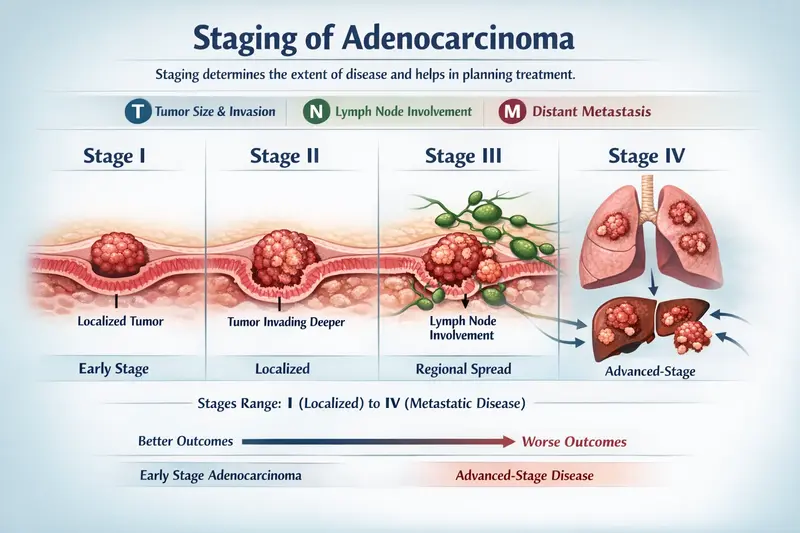
Staging of Adenocarcinoma

Staging determines the extent of disease and helps in planning treatment. The TNM system is commonly used:

  • T – Tumor size and depth of invasion
  • N – Lymph node involvement
  • M – Distant metastasis

Stages range from I (localized) to IV (metastatic disease). Early-stage adenocarcinoma often has significantly better outcomes compared to advanced-stage disease.

Treatment of Adenocarcinoma

Treatment depends on:


Organ involved
Stage of disease
Molecular profile
Patient’s overall health
Multidisciplinary evaluation

In many cases, treatment involves a combination of modalities.


Surgery: The Cornerstone of Curative Treatment

For localized adenocarcinoma, surgery is often the primary curative option.

Procedures may include:
  • Laparoscopic colectomy
  • Low anterior resection
  • Gastrectomy with lymphadenectomy
  • Pancreaticoduodenectomy (Whipple procedure)
  • Esophagectomy
  • Lung lobectomy
  • Cytoreductive surgery with HIPEC (selected cases)
Minimally invasive approaches offer:
  • Smaller incisions
  • Reduced blood loss
  • Less postoperative pain
  • Faster recovery
  • Early return to daily activities
Chemotherapy

Chemotherapy may be used:

  • Before surgery (neoadjuvant)
  • After surgery (adjuvant)
  • For metastatic disease
Targeted Therapy

Drugs designed to attack specific molecular mutations within cancer cells, helping to stop tumor growth while minimizing damage to normal cells.

Immunotherapy

Stimulates the immune system to recognize and fight cancer cells. Particularly effective in selected molecular subtypes.

Radiation Therapy

Radiation therapy is used in selected adenocarcinomas such as rectal and esophageal cancers to shrink tumors or destroy cancer cells.

Multidisciplinary Cancer Care

Modern adenocarcinoma treatment requires collaboration among:

Surgical oncologists
Medical oncologists
Radiation oncologists
Radiologists
Pathologists
Nutritionists

Each patient’s case is carefully reviewed to design a personalized treatment plan.

Adenocarcinoma Surgery by Dr. Lovedeep Singh Chauhan

Dr. Lovedeep Singh Chauhan is a highly trained Consultant Surgical Oncologist with advanced expertise in managing glandular cancers.

Training & Expertise
  • MCh Surgical Oncology from Tata Memorial Hospital
  • Specialized in minimally invasive and robotic cancer surgery
  • Experience in complex GI, HPB, colorectal, and thoracic malignancies
Currently practicing at:

Max Super Speciality Hospital, Mohali

Evidence-Based Treatment

Areas of Specialized Care

Colorectal Adenocarcinoma
  • Advanced laparoscopic colon and rectal surgery
  • Sphincter-preserving procedures
  • Multimodal rectal cancer treatment
Gastric & Esophageal Adenocarcinoma
  • Radical gastrectomy
  • D2 lymph node dissection
  • Minimally invasive esophagectomy
Pancreatic Adenocarcinoma
  • Whipple surgery
  • Distal pancreatectomy
  • Multidisciplinary perioperative planning
Peritoneal Surface Malignancies
  • Cytoreductive surgery
  • HIPEC and PIPAC

Why Choose Dr. Lovedeep Singh Chauhan?

  • Evidence-Based Practice – Treatment aligned with global oncology guidelines.
  • Advanced Minimally Invasive Techniques – Robotic and laparoscopic surgery for precision and improved recovery.
  • Comprehensive Surgical Oncology Expertise – Experience across GI, HPB, colorectal, thoracic, and peritoneal cancers.
  • Transparent Communication – Detailed discussion of diagnosis, staging, risks, and expected outcomes.
  • Ethical, Patient-Centered Care – Focus on both survival and quality of life.
Evidence-Based Treatment

What to Expect During Your Consultation

  • Thorough review of medical history
  • Evaluation of imaging and biopsy reports
  • Stage assessment
  • Discussion of treatment roadmap
  • Surgical planning if indicated
  • Coordination with oncology team

Second opinions are welcome and often helpful in complex cases.

Recovery After Adenocarcinoma Surgery

Postoperative care includes:

  • Early mobilization
  • Nutritional optimization
  • Pain management
  • Wound care
  • Gradual diet progression
  • Follow-up imaging and tumor markers

Long-term surveillance is crucial to detect recurrence early.

Frequently Asked Questions

Yes, if diagnosed at an early stage and treated appropriately.

When performed by experienced surgical oncologists, robotic surgery is safe and offers improved precision.

Recovery varies depending on the organ involved and type of surgery, but minimally invasive procedures typically shorten hospital stay.

Not always. Early-stage disease may require surgery alone, while advanced stages often need combined therapy.

When Should You Seek Expert Care?

Consult a surgical oncologist if you have:

  • Biopsy-confirmed adenocarcinoma
  • Suspicious mass detected on imaging
  • Recurrent cancer
  • Strong family history
  • Need for advanced surgical opinion

Early specialist intervention improves outcomes and ensures proper treatment sequencing.

Have a Question? Get In Touch

whatsapp-mobi
h-call
  • Book An Appointment