

!-- HERO SECTION -->

Signet Ring Cell Carcinoma Treatment

Dr. Lovedeep Singh Chauhan

Advanced Surgical & Multidisciplinary Cancer Care by Dr. Lovedeep Singh Chauhan

What is Signet Ring Cell Carcinoma?

Signet Ring Cell Carcinoma (SRCC) is a rare and biologically aggressive subtype of adenocarcinoma. It is characterized by malignant cells that contain large amounts of mucin. This mucin pushes the nucleus of the cell to one side, creating a distinctive appearance that resembles a signet ring when viewed under a microscope.

SRCC can develop in several organs of the body and is known for its infiltrative growth pattern. Because it can spread early and grow diffusely within tissues, early diagnosis and proper medical management are extremely important for better treatment outcomes.

Signet Ring Cell Carcinoma most commonly arises in the following organs:

  • Stomach (diffuse-type gastric cancer)
  • Colon and rectum
  • Breast
  • Pancreas
  • Gallbladder
  • Urinary bladder

Among these, gastric Signet Ring Cell Carcinoma is the most commonly diagnosed form worldwide. Due to its aggressive nature and potential for early spread, patients often require specialized oncological evaluation and treatment planning.

How Signet Ring Cell Carcinoma Differs from Other Adenocarcinomas

Unlike conventional adenocarcinomas that usually form a well-defined tumor mass, Signet Ring Cell Carcinoma (SRCC) often behaves differently in the body and may not create a clearly visible lump.

SRCC commonly shows the following characteristics:

  • Grows diffusely within the tissue layers
  • Thickens the organ wall without forming a distinct tumor mass
  • Spreads early to nearby lymph nodes
  • Frequently involves the peritoneum (abdominal lining)
  • May present at an advanced stage at the time of diagnosis

In gastric cancer classification, Signet Ring Cell Carcinoma is categorized under the diffuse type according to the Lauren classification system. Because of this diffuse growth pattern, early detection can be more difficult. This makes clinical suspicion, timely screening, and expert pathological evaluation extremely important for accurate diagnosis and appropriate treatment planning.

Dr. Lovedeep Singh Chauhan

Causes and Risk Factors

The causes of Signet Ring Cell Carcinoma (SRCC) depend on the organ where the cancer originates. While the exact biological mechanisms may vary across different organs, several environmental, genetic, and lifestyle-related factors have been associated with a higher risk of developing this rare cancer subtype.

1. Gastric Signet Ring Cell Carcinoma

Several environmental and genetic factors may increase the risk of developing gastric Signet Ring Cell Carcinoma, including:

  • Chronic gastritis
  • Helicobacter pylori infection
  • High salt and smoked food intake
  • Family history of gastric cancer
  • CDH1 gene mutation (Hereditary Diffuse Gastric Cancer syndrome)

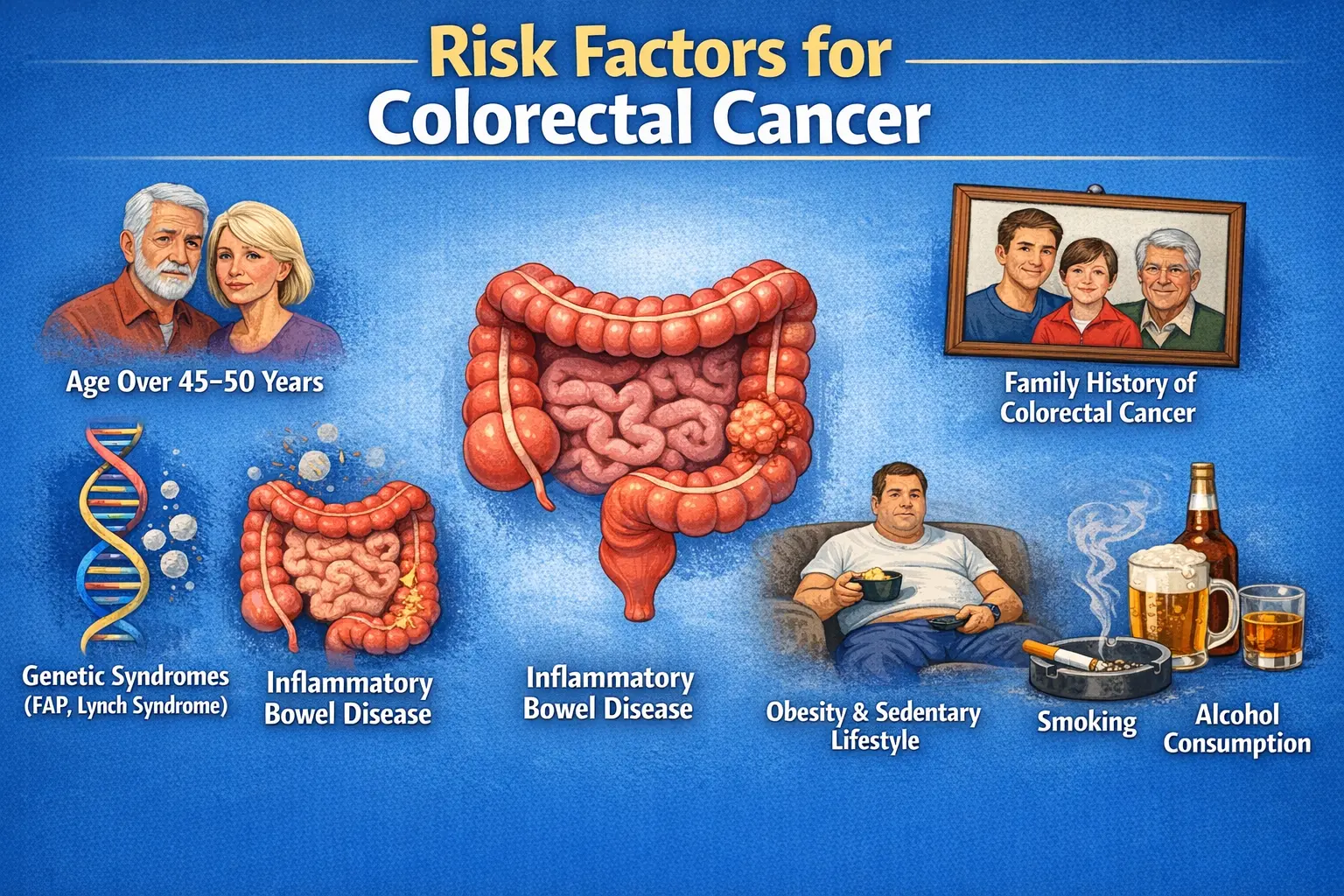
2. Colorectal Signet Ring Cell Carcinoma

Certain gastrointestinal conditions and inherited syndromes are linked with a higher risk of colorectal Signet Ring Cell Carcinoma.

  • Inflammatory bowel disease
  • Genetic conditions such as Lynch syndrome
  • Family history of colorectal cancer
  • Long-standing colorectal polyps

3. Breast Signet Ring Variant

In the breast, Signet Ring Cell features are most commonly seen in association with invasive lobular carcinoma.

  • Often associated with invasive lobular carcinoma
  • Hormonal risk factors similar to other breast cancers

Symptoms of Signet Ring Cell Carcinoma

Symptoms of Signet Ring Cell Carcinoma (SRCC) vary depending on the primary organ involved. Because SRCC often grows diffusely within tissues rather than forming a clear tumor mass, early symptoms can be subtle and may develop gradually.

1. Gastric SRCC Symptoms

When Signet Ring Cell Carcinoma affects the stomach, patients may experience:

  • Persistent upper abdominal pain
  • Early satiety (feeling full quickly)
  • Unexplained weight loss
  • Vomiting or nausea
  • Anemia
  • Black or tarry stools

2. Colorectal SRCC Symptoms

In the colon or rectum, symptoms may include changes in bowel function and digestive discomfort.

  • Change in bowel habits
  • Blood in stool
  • Abdominal distension
  • Persistent constipation or diarrhea
  • Unexplained weight loss

3. Breast SRCC Symptoms

When signet ring features are present in breast cancer, patients may notice:

  • Thickening or lump in the breast
  • Skin dimpling
  • Nipple retraction
  • Swelling in the axilla (lymph nodes)

Any persistent or progressive symptom should be evaluated by a healthcare professional for proper diagnosis and timely treatment.

How is Signet Ring Cell Carcinoma Diagnosed?

Early and accurate diagnosis is the cornerstone of effective treatment. Doctors use a combination of clinical evaluation, imaging techniques, and laboratory tests to confirm the presence of Signet Ring Cell Carcinoma and determine its stage.

1. Clinical Evaluation

A detailed medical history and physical examination help doctors identify potential symptoms, warning signs, and risk factors associated with Signet Ring Cell Carcinoma.

2. Endoscopic Examination

Endoscopy allows doctors to directly visualize the digestive tract and collect biopsy samples.

  • Upper GI endoscopy for suspected gastric cancer
  • Colonoscopy for suspected colorectal cancer
  • Biopsy samples taken for pathological confirmation

3. Imaging Studies

Imaging tests help determine the size of the tumor, its spread, and overall disease stage.

  • Contrast-enhanced CT scan
  • MRI (selected cases)
  • PET-CT scan for advanced staging

4. Histopathology

Microscopic examination of biopsy tissue confirms the presence of signet ring cells filled with mucin. Immunohistochemistry (IHC) testing may also be performed to determine the primary origin in cases where cancer has metastasized.

5. Molecular Testing

Advanced molecular testing helps guide personalized cancer treatment and targeted therapy.

  • HER2 status testing
  • MSI (Microsatellite instability)
  • PD-L1 expression
  • Other molecular markers

These tests help doctors determine whether targeted therapy or immunotherapy may be effective for the patient.

Staging of Signet Ring Cell Carcinoma

Staging of Signet Ring Cell Carcinoma (SRCC) is performed using the TNM classification system, which helps determine the extent of the disease and guides treatment planning.

The TNM system includes:

  • T (Tumor) – Depth of invasion
  • N (Nodes) – Lymph node involvement
  • M (Metastasis) – Distant spread

Compared to many other cancer subtypes, SRCC has a higher likelihood of spreading to nearby lymph nodes and distant organs.

Common metastatic sites may include the peritoneum, liver, and ovaries (Krukenberg tumor in gastric cancer cases). Accurate staging is essential before initiating treatment to determine the most appropriate therapeutic approach.

Signet Ring Cell Carcinoma Staging

Treatment of Signet Ring Cell Carcinoma

Management of Signet Ring Cell Carcinoma (SRCC) depends on several factors including the primary organ involved, stage of the disease, patient’s overall health, and molecular characteristics of the tumor.

1. Surgical Treatment

Surgery remains the primary treatment option for localized Signet Ring Cell Carcinoma in many organs. The goal is complete removal of the tumor along with surrounding tissues and regional lymph nodes.

Surgical management typically involves:

  • Removal of the primary tumor
  • Regional lymph node dissection
  • Adequate surgical margins
  • Resection of affected adjacent structures when necessary

The exact surgical procedure varies depending on whether the cancer originates in the stomach, colon, breast, or other organs.

2. Chemotherapy

Systemic chemotherapy plays an important role in the treatment of Signet Ring Cell Carcinoma, particularly in advanced or high-risk cases.

Chemotherapy may be used in different settings:

  • Neoadjuvant therapy before surgery
  • Adjuvant therapy after surgery
  • Treatment for metastatic disease

The choice of drugs and treatment schedule depends on the type of cancer and the patient’s overall condition.

3. Targeted Therapy & Immunotherapy

Advances in molecular diagnostics allow doctors to identify specific genetic alterations that may respond to targeted therapy or immunotherapy.

  • HER2 targeted therapy in selected gastric cancers
  • Immunotherapy for MSI-high tumors
  • PD-L1 directed therapies in advanced cases

Molecular profiling helps personalize treatment strategies and improve outcomes in certain patients.

4. Multidisciplinary Care

Treatment of Signet Ring Cell Carcinoma usually requires a coordinated approach involving specialists from multiple disciplines.

  • Surgical oncology
  • Medical oncology
  • Radiology
  • Pathology
  • Supportive care specialists

This multidisciplinary strategy ensures comprehensive evaluation, personalized treatment planning, and optimal patient outcomes.

Surgical Treatment

Surgery is the mainstay of treatment for localized Signet Ring Cell Carcinoma (SRCC). The exact procedure depends on the primary organ involved and the stage of disease.

Gastric SRCC Surgery

For stomach cancers with signet ring features, surgical options may include:

  • Subtotal gastrectomy (partial removal of stomach)
  • Total gastrectomy
  • D2 lymph node dissection
Colorectal SRCC Surgery

When SRCC occurs in the colon or rectum, surgery aims to remove the tumor along with nearby lymph nodes.

  • Segmental colectomy
  • Total mesorectal excision (for rectal cancer)
  • Lymphadenectomy
Peritoneal Metastasis Management

In selected patients with cancer spread within the abdominal cavity, advanced surgical techniques may be considered.

  • Cytoreductive Surgery (CRS)
  • HIPEC (Hyperthermic Intraperitoneal Chemotherapy)

HIPEC involves circulating heated chemotherapy inside the abdominal cavity to destroy microscopic cancer cells after surgical removal of visible tumors.

Chemotherapy

Chemotherapy may be used in different stages of treatment depending on the extent of disease.

It may be given:

  • Before surgery (Neoadjuvant therapy)
  • After surgery (Adjuvant therapy)
  • As primary treatment in advanced disease

Treatment regimens vary depending on the primary cancer type, staging, and the patient’s overall health condition.

Targeted Therapy & Immunotherapy

Modern cancer treatment may include targeted therapy or immunotherapy based on specific molecular markers.

  • HER2-targeted therapy in HER2-positive gastric cancer
  • Immunotherapy using PD-1 / PD-L1 inhibitors in selected patients
  • MSI-high tumors may respond better to immunotherapy

Personalized treatment planning helps improve outcomes while reducing unnecessary treatment-related toxicity.

Prognosis of Signet Ring Cell Carcinoma

Prognosis depends on:


Stage at diagnosis
Completeness of surgical removal
Lymph node involvement
Peritoneal spread
Response to chemotherapy

While SRCC is considered aggressive, early-stage disease treated appropriately can achieve favorable outcomes.

Long-term surveillance and follow-up are essential.


Signet Ring Cell Carcinoma Treatment by Dr. Lovedeep Singh Chauhan

When dealing with a rare and complex cancer like SRCC, choosing a highly trained surgical oncologist is crucial.

Specialized Cancer Care

Dr. Lovedeep Singh Chauhan is a Consultant Surgical Oncologist at Max Super Speciality Hospital Mohali with advanced training from Tata Memorial Hospital — one of India’s leading cancer centers.

  • Expertise in complex cancer surgeries
  • Advanced surgical oncology training
  • Experience in multidisciplinary cancer management
Early diagnosis and treatment planning by a specialized cancer surgeon can significantly improve outcomes.

Why Choose Dr. Lovedeep Singh Chauhan for SRCC Treatment?

1. Evidence-Based Cancer Care

Every case is thoroughly evaluated using current international treatment guidelines and tumor board discussions.

2. Advanced Surgical Expertise
  • Precise oncologic resections
  • Adequate lymph node dissection
  • Minimally invasive approaches
3. HIPEC & Peritoneal Management

Specialized experience in cytoreductive surgery and HIPEC for patients with peritoneal metastasis.

4. Patient-Centered Approach

Clear communication, transparent planning, and long-term follow-up support are integral parts of care.

Treatment Workflow

  • Detailed consultation and medical review
  • Review of biopsy slides and imaging
  • Comprehensive staging
  • Multidisciplinary tumor board discussion
  • Personalized treatment plan
  • Surgical intervention (if indicated)
  • Chemotherapy or additional therapies
  • Structured follow-up and surveillance

When Should You Seek Expert Consultation?

  • Biopsy report mentioning “signet ring cells”
  • Newly diagnosed gastric or colorectal cancer
  • Unexplained persistent abdominal symptoms
  • Recurrent abdominal cancer
  • Peritoneal metastasis diagnosis

Early specialist evaluation improves treatment planning and survival outcomes.

Frequently Asked Questions

Yes, if diagnosed at an early stage and treated appropriately with surgery and systemic therapy.

In localized disease, surgery is typically the cornerstone of treatment. In advanced cases, chemotherapy may be the primary approach.

In selected cases, laparoscopic or robotic surgery may be feasible and safe.

No. HIPEC is recommended only in selected cases with peritoneal involvement after careful evaluation.

Have a Question? Get In Touch

whatsapp-mobi
h-call
  • Book An Appointment